Earth · Erra · The space between
The worlds
Two skies. Two ways of understanding reality. One woman moving between them.
A living contrast
Gravity &
resonance
The trilogy’s scale stretches across light-years, but its emotional geography begins with ordinary places: a kitchen table, wet paving, an old tree and the difficult intimacy of being believed.
01 / Earth
The weight of the familiar
Utrecht is not a backdrop. It is the measure Elsa uses for everything she can no longer explain.
On Earth, knowledge belongs to universities, hospitals, governments and the media. Evidence must fit forms, screens and protocols. Love often arrives disguised as concern—and concern can become control before anyone notices the line has moved.
The rain, brick, buses and old trees keep the cosmic story grounded in the physical world Elsa must continue to inhabit.
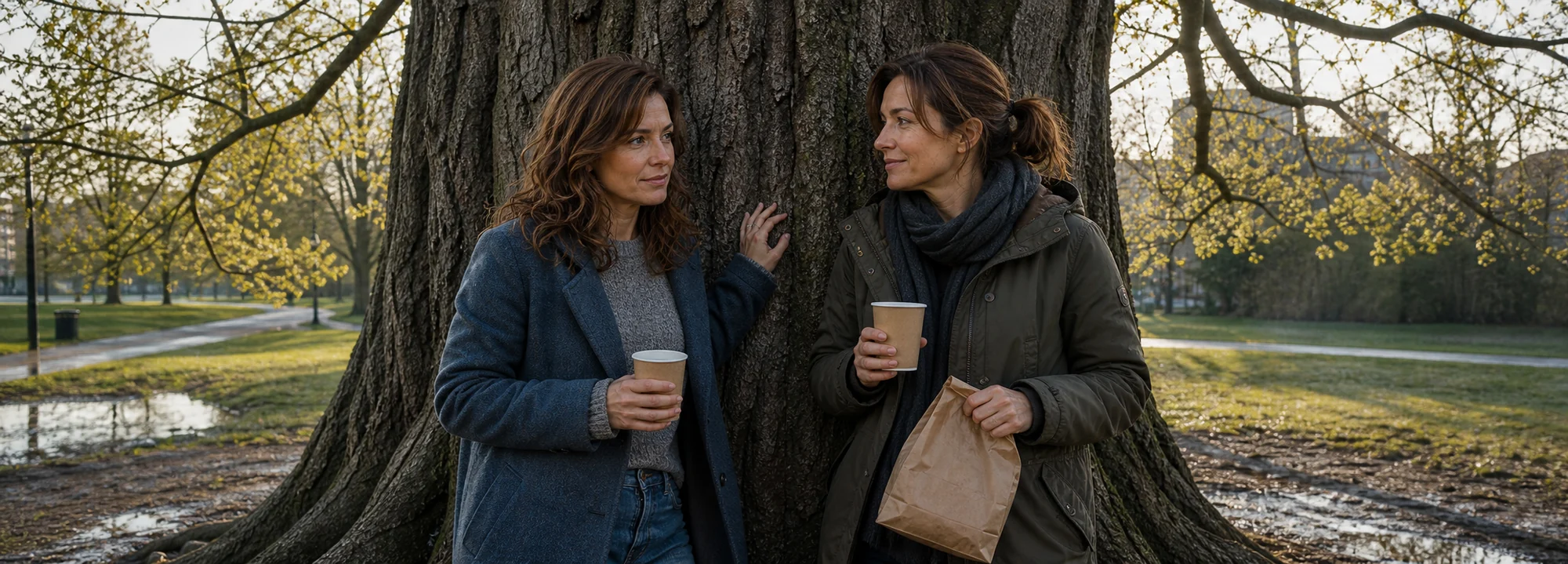
Sometimes the most important contact is the hand that stays close without taking hold.
02 / Erra
A world shaped by attention
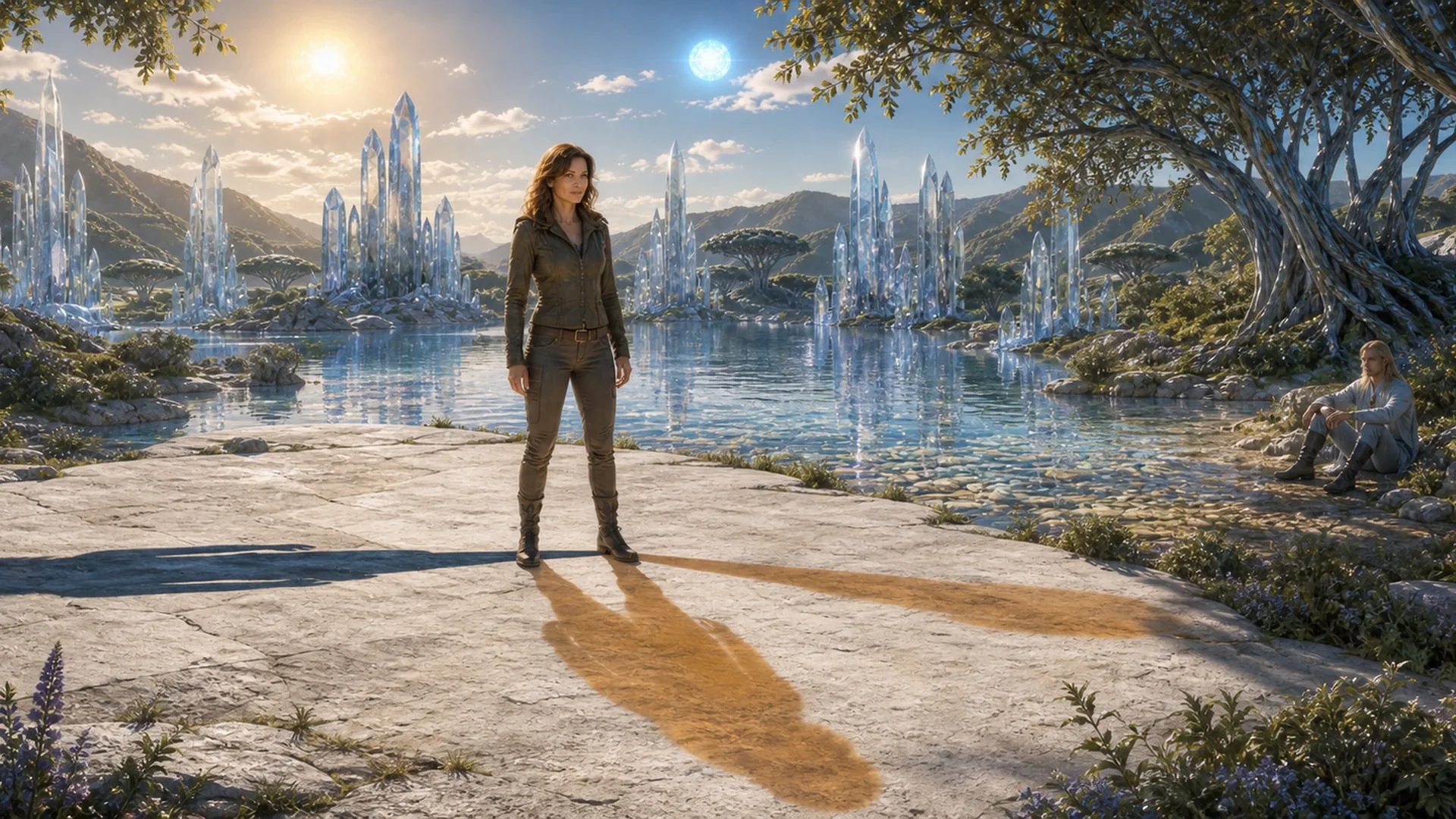
Erra is illuminated by two suns—and by a civilisation that does not separate consciousness from the structure of reality.
Its crystalline cities, organic architecture and resonant technologies confront Elsa with a different question. Not simply what can be built, but what kind of inner life a technology asks from the people who use it.
Erra offers wonder without demanding surrender. Its deepest lesson is not that another world has every answer, but that connection means little when choice is absent.
03 / The threshold
Where certainty gives way
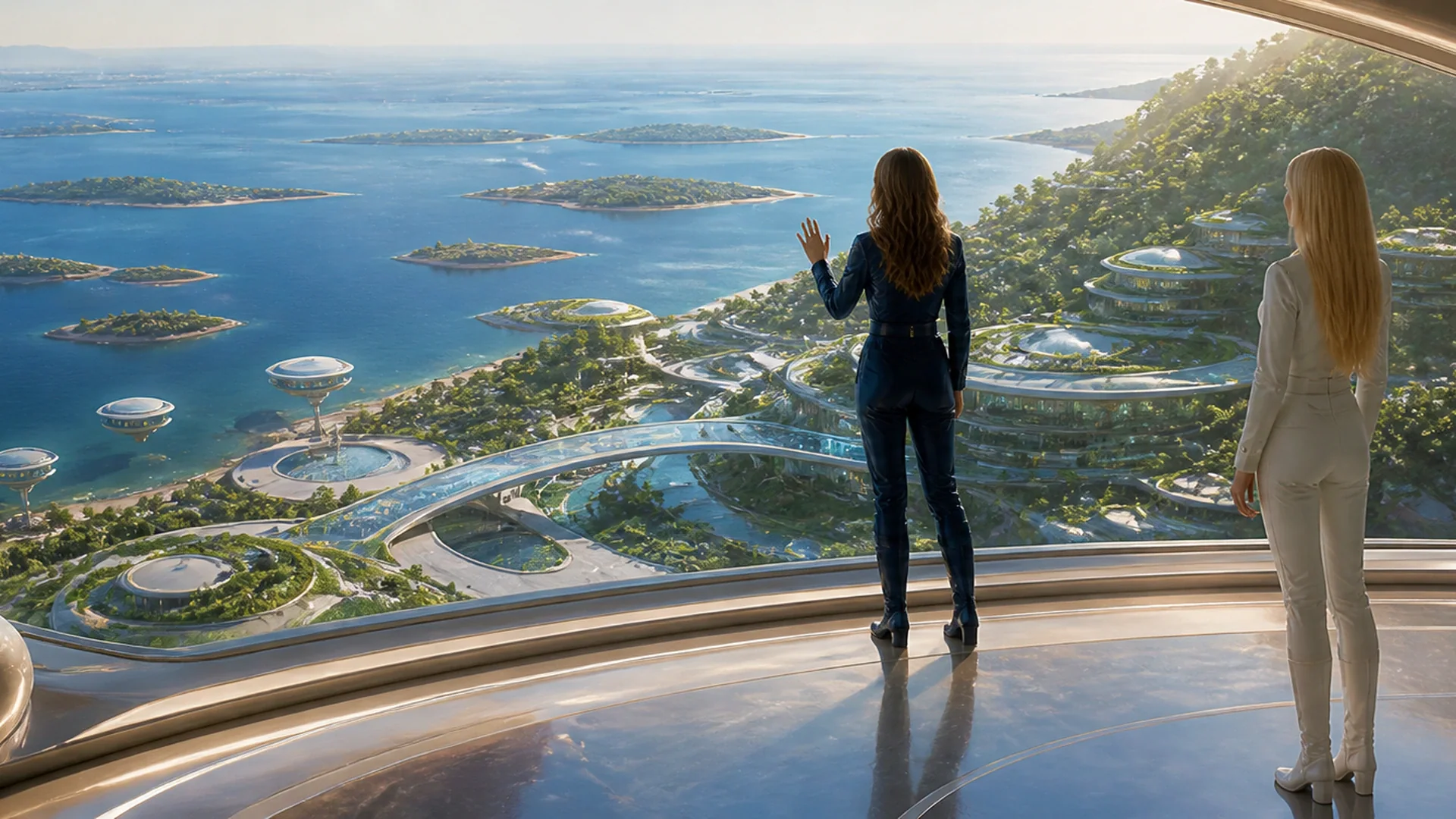
The real distance between worlds is not measured in light-years. It is measured in what a person is willing to reconsider.
The crystal, the lens and the signal are more than devices. They are thresholds: moments where observation becomes participation and every answer creates a new responsibility.
Begin with book one